
First let’s meet our current Supreme Court Judges:
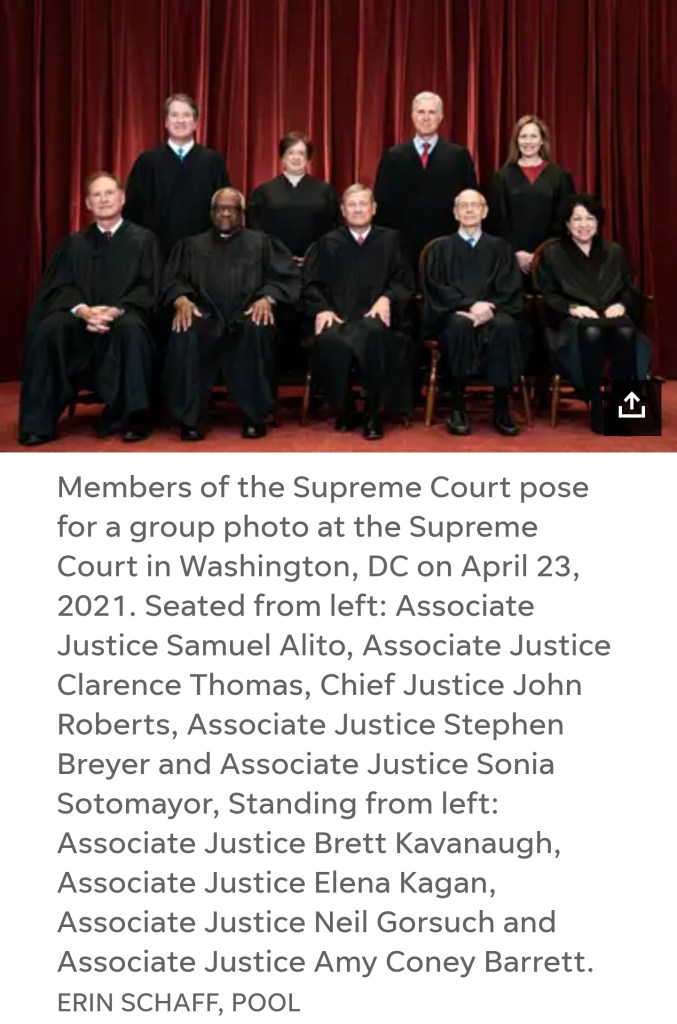
I believe it is important to have clarity about the involved major players. Here are the Supreme Court Justices Appointed to Seat since 1975, and who nominated them.



Now, let’s clarify how the Supreme Court Justices are appointed, our Judiciary System, and their duties, obligations, requirements and etc. I find it very important to really understand their position, our judicial system, and the roles they play in our society, and daily life.
The Judicial Branch
Article III of the Constitution of the United States guarantees that every person accused of wrongdoing has the right to a fair trial before a competent judge and a jury of one’s peers.
Where the executive and legislative branches are elected by the people, members of the Judicial Branch are appointed by the President and confirmed by the Senate.
Article III of the Constitution, which establishes the Judicial Branch, leaves Congress significant discretion to determine the shape and structure of the federal judiciary. Even the number of Supreme Court Justices is left to Congress — at times there have been as few as six, while the current number (nine, with one Chief Justice and eight Associate Justices) has only been in place since 1869. The Constitution also grants Congress the power to establish courts inferior to the Supreme Court, and to that end Congress has established the United States district courts, which try most federal cases, and 13 United States courts of appeals, which review appealed district court cases.
Federal judges can only be removed through impeachment by the House of Representatives and conviction in the Senate. Judges and Justices serve no fixed term — they serve until their death, retirement, or conviction by the Senate. By design, this insulates them from the temporary passions of the public, and allows them to apply the law with only justice in mind, and not electoral or political concerns.
Generally, Congress determines the jurisdiction of the federal courts. In some cases, however — such as in the example of a dispute between two or more U.S. states — the Constitution grants the Supreme Court original jurisdiction, an authority that cannot be stripped by Congress.
The courts only try actual cases and controversies — a party must show that it has been harmed in order to bring suit in court. This means that the courts do not issue advisory opinions on the constitutionality of laws or the legality of actions if the ruling would have no practical effect. Cases brought before the judiciary typically proceed from district court to appellate court and may even end at the Supreme Court, although the Supreme Court hears comparatively few cases each year.
Federal courts enjoy the sole power to interpret the law, determine the constitutionality of the law, and apply it to individual cases. The courts, like Congress, can compel the production of evidence and testimony through the use of a subpoena. The inferior courts are constrained by the decisions of the Supreme Court — once the Supreme Court interprets a law, inferior courts must apply the Supreme Court’s interpretation to the facts of a particular case.
The Supreme Court of the United States
The Supreme Court of the United States is the highest court in the land and the only part of the federal judiciary specifically required by the Constitution.
The Constitution does not stipulate the number of Supreme Court Justices; the number is set instead by Congress. There have been as few as six, but since 1869 there have been nine Justices, including one Chief Justice. All Justices are nominated by the President, confirmed by the Senate, and hold their offices under life tenure. Since Justices do not have to run or campaign for re-election, they are thought to be insulated from political pressure when deciding cases. Justices may remain in office until they resign, pass away, or are impeached and convicted by Congress.
The Court’s caseload is almost entirely appellate in nature, and the Court’s decisions cannot be appealed to any authority, as it is the final judicial arbiter in the United States on matters of federal law. However, the Court may consider appeals from the highest state courts or from federal appellate courts. The Court also has original jurisdiction over limited types of cases, including those involving ambassadors and other diplomats, and in cases between states.
Although the Supreme Court may hear an appeal on any question of law provided it has jurisdiction, it usually does not hold trials. Instead, the Court’s task is to interpret the meaning of a law, to decide whether a law is relevant to a particular set of facts, or to rule on how a law should be applied. Lower courts are obligated to follow the precedent set by the Supreme Court when rendering decisions.
In almost all instances, the Supreme Court does not hear appeals as a matter of right; instead, parties must petition the Court for a writ of certiorari. It is the Court’s custom and practice to “grant cert” if four of the nine Justices decide that they should hear the case. Of the approximately 7,500 requests for certiorari filed each year, the Court usually grants cert to fewer than 150. These are typically cases that the Court considers sufficiently important to require their review; a common example is the occasion when two or more of the federal courts of appeals have ruled differently on the same question of federal law.
If the Court grants certiorari, Justices accept legal briefs from the parties to the case, as well as from amicus curiae, or “friends of the court.” These can include industry trade groups, academics, or even the U.S. government itself. Before issuing a ruling, the Supreme Court usually hears oral arguments, where the various parties to the suit present their arguments and the Justices ask them questions. If the case involves the federal government, the Solicitor General of the United States presents arguments on behalf of the United States. The Justices then hold private conferences, make their decision, and (often after a period of several months) issue the Court’s opinion, along with any dissenting arguments that may have been written.
The Judicial Process
Article III of the Constitution of the United States guarantees that every person accused of wrongdoing has the right to a fair trial before a competent judge and a jury of one’s peers.
The Fourth, Fifth, Sixth, and Eighth Amendments to the Constitution provide additional protections for those accused of a crime. These include:
- A guarantee that no person shall be deprived of life, liberty, or property without the due process of law
- Protection against being tried for the same crime twice (“double jeopardy”)
- The right to a speedy trial by an impartial jury
- The right to cross-examine witnesses, and to call witnesses to support their case
- The right to legal representation
- The right to avoid self-incrimination
- Protection from excessive bail, excessive fines, and cruel and unusual punishments
Criminal proceedings can be conducted under either state or federal law, depending on the nature and extent of the crime. A criminal legal procedure typically begins with an arrest by a law enforcement officer. If a grand jury chooses to deliver an indictment, the accused will appear before a judge and be formally charged with a crime, at which time he or she may enter a plea.
The defendant is given time to review all the evidence in the case and to build a legal argument. Then, the case is brought to trial and decided by a jury. If the defendant is determined to be not guilty of the crime, the charges are dismissed. Otherwise, the judge determines the sentence, which can include prison time, a fine, or even execution.
Civil cases are similar to criminal ones, but instead of arbitrating between the state and a person or organization, they deal with disputes between individuals or organizations. In civil cases, if a party believes that it has been wronged, it can file suit in civil court to attempt to have that wrong remedied through an order to cease and desist, alter behavior, or award monetary damages. After the suit is filed and evidence is gathered and presented by both sides, a trial proceeds as in a criminal case. If the parties involved waive their right to a jury trial, the case can be decided by a judge; otherwise, the case is decided and damages awarded by a jury.
After a criminal or civil case is tried, it may be appealed to a higher court — a federal court of appeals or state appellate court. A litigant who files an appeal, known as an “appellant,” must show that the trial court or administrative agency made a legal error that affected the outcome of the case. An appellate court makes its decision based on the record of the case established by the trial court or agency — it does not receive additional evidence or hear witnesses. It may also review the factual findings of the trial court or agency, but typically may only overturn a trial outcome on factual grounds if the findings were “clearly erroneous.” If a defendant is found not guilty in a criminal proceeding, he or she cannot be retried on the same set of facts.
Federal appeals are decided by panels of three judges. The appellant presents legal arguments to the panel, in a written document called a “brief.” In the brief, the appellant tries to persuade the judges that the trial court made an error, and that the lower decision should be reversed. On the other hand, the party defending against the appeal, known as the “appellee” or “respondent,” tries in its brief to show why the trial court decision was correct, or why any errors made by the trial court are not significant enough to affect the outcome of the case.
The court of appeals usually has the final word in the case, unless it sends the case back to the trial court for additional proceedings. In some cases the decision may be reviewed en banc — that is, by a larger group of judges of the court of appeals for the circuit.
A litigant who loses in a federal court of appeals, or in the highest court of a state, may file a petition for a “writ of certiorari,” which is a document asking the U.S. Supreme Court to review the case. The Supreme Court, however, is not obligated to grant review. The Court typically will agree to hear a case only when it involves a new and important legal principle, or when two or more federal appellate courts have interpreted a law differently. (There are also special circumstances in which the Supreme Court is required by law to hear an appeal.) When the Supreme Court hears a case, the parties are required to file written briefs and the Court may hear oral argument.
The Supreme Court of the United States: All Justices are nominated by the President, confirmed by the Senate, and hold their offices under life tenure.
So now that we understand ‘Our Judicial System’ let’s move forward. How did we get to our current tawdry SCOTUS. The below article was featured in JEZEBEL just 2 days ago, as are similar outlets and articles are speaking to the current status of our SCOTUS. Why is this important? Because the lurid acts being committed by the highest Judicial Authorities is becoming a more, and more frequent occurrence, for one, but also the lengths the Judicial Authorities, our Government bodies, and certain Corporations have gone to conceal these acts, and/or redefine their actions to best suit their narrativeand agenda. Meanwhile, all at the cost of ‘We the People’, and our lives.
We seemingly have gone from an unbiased legal system, to a politically driven SCOTUS, where not just politics influence their decisions, but also their personal lives, and religion have now entered the Courts, and their rulings.
The article as seen in JEZEBEL, May 2, 2023:

A Non-Exhaustive List of Supreme Court Justice Scandals Since 1991
Susan Rinkunas
May 2, 2023, 2:20 pm

The Supreme Court’s popularity is in the toilet. For months now, public support for the increasingly polarized institution has been tanking—likely hastened by its unprecedented ruling to overturn Roe v. Wade, the first time the court’s ever revoked a right it’d previously granted—and, for the first time, a majority of Americans want to see the court expanded. Yet, in the face of these stats, many of the justices don’t seem chastened at all!
All those polls were conducted before the rash of recent reporting that’s uncovered various ethics scandals involving Justices Clarence Thomas, Neil Gorsuch, and John Roberts and their alleged financial conflicts of interest. The investigations underscored the fact that it’s the justices’ call on whether they recuse themselves from certain cases, and there’s no way to appeal a failure to recuse. Even Sen. Judiciary Chair Dick Durbin (D.Ill)—with whom I have beef—has come out swinging, saying that “the highest court in the land shouldn’t have the lowest standard of ethics in the federal government.” (That’s good stuff, Senator, now issue some subpoenas.)

So why are lawmakers and advocates talking about court reform? Well, it goes back years with some of these folks. Let’s roll the tapes!
Clarence Thomas Allegedly Lying Under Oath

During his 1991 Senate confirmation hearing, Thomas claimed he didn’t sexually harass Anita Hill or any other women coworkers during his time at federal agencies—when there’s evidence to refute that. Thomas did, however, say that the allegations were part of a “high-tech lynching.” He said, “it is a message that, unless you kow-tow to an old order, this is what will happen to you, you will be lynched, destroyed, caricatured by a committee of the U.S. Senate, rather than hung from a tree.”
Here’s journalist Jill Abramson writing in 2018:
To my surprise, the notion of impeaching Thomas resurfaced during the 2016 campaign. In the thousands of emails made public during the FBI investigation of Hillary Clinton, there was one curious document from her State Department files that caught my attention, though it went largely unremarked upon in the press. Labeled “Memo on Impeaching Clarence Thomas” and written by a close adviser, the former right-wing operative David Brock, in 2010, the seven-page document lays out the considerable evidence, including material from our book, that Thomas lied to the Judiciary Committee when he categorically denied that he had discussed pornographic films or made sexual comments in the office to Hill or any other women who worked for him. When I recently interviewed Brock, he said that Clinton “wanted to be briefed” on the evidence that Thomas lied in order to be confirmed to his lifelong seat on the Court. He said he had no idea if a President Hillary Clinton would have backed an effort to unseat Thomas.
And, yes, there’s much more to say about Thomas, so please trudge along with me.
Brett Kavanaugh Allegedly Lying Under Oath

Where to begin? Justice Brett Kavanaugh was confirmed in 2018 despite credible allegations that he’d sexually assaulted women in high school and college. One of his former roommates said he lied under oath when he claimed not to know the meaning of a sexual euphemism while other classmates said he lied about never blacking out from drinking at Yale, among many other details. The FBI received more than 4,500 tips about Kavanaugh and did nothing with them beyond punting them to the Trump administration since the agency said it was only conducting a routine background check. In January, a surprise documentary premiered at Sundance detailing other instances of sexual misconduct that the FBI did not investigate.
Kavanaugh also appears to have lied under oath about his work in the Bush Administration during prior confirmation hearings in 2004 and 2006.
Amy Coney Barrett’s Ties to Alliance Defending Freedom

Justice Amy Coney Barrett has connections to the right-wing Christian legal group Alliance Defending Freedom—the same group that argued the case the Supreme Court used to overturn Roe and is also representing the plaintiffs in the baseless but still hugely consequential abortion pill lawsuit. The organization paid her for speaking five times at its Blackstone Legal Fellowship, a summer program for law students meant to inspire a “distinctly Christian worldview in every area of law.”
ADF is also the legal counsel in a nominal “free speech” case that could actually destroy nondiscrimination protections for LGBTQ people; it’s called 303 Creative v. Elenis. Barrett was also a member of a religious group, People of Praise, that expelled members who had gay sex. In 2022, former members of the group called for her to recuse herself from 303 Creative; she did not. During a 2017 confirmation hearing for a spot on a lower court, Barrett claimed not to know that ADF had an anti-LGBTQ agenda.
Plus, uh, Barrett getting confirmed in late October 2020 after millions of people had already voted in a presidential election—an election that would oust the man who nominated her—is just an eternal stain on this woman’s tenure.
Clarence Thomas’ Connections to a GOP Megadonor
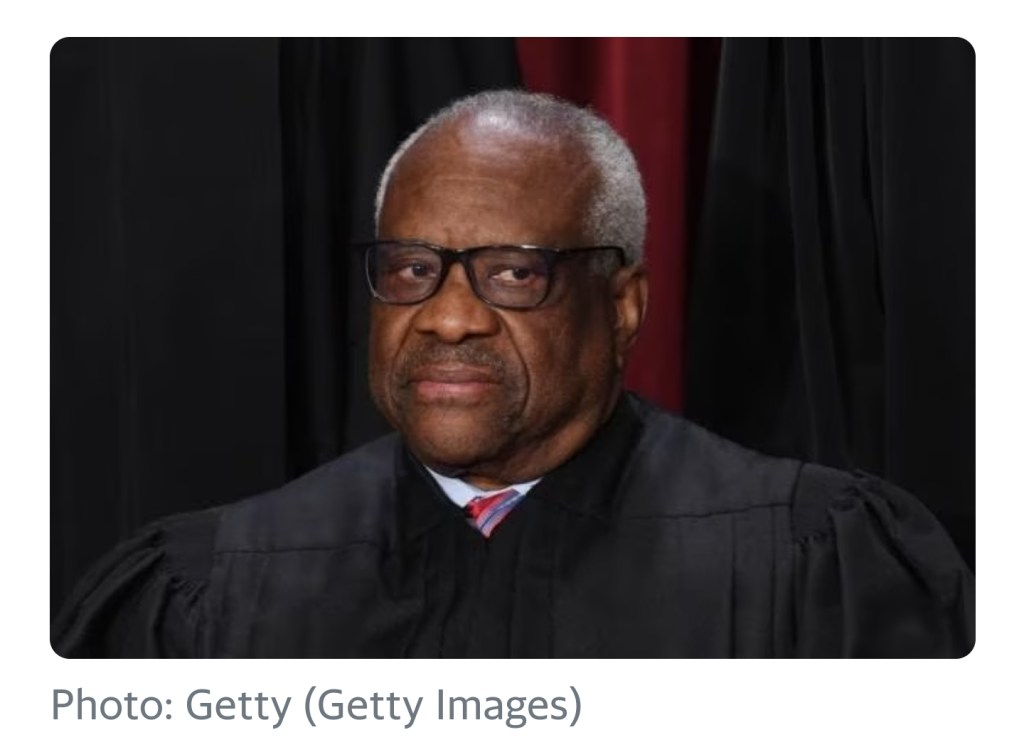
For years, Justice Clarence Thomas failed to report that billionaire and GOP megadonor Harlan Crow took him on luxury vacations or that Crow bought property from him at inflated prices, including the house where Thomas’ mother still lives and pays zero in rent. This isn’t even the first time Thomas has had to amend his disclosure forms. In 2011, he faced scrutiny for not reporting hundreds of thousands of dollars of his wife’s income from conservative groups including the Heritage Foundation. Thomas then amended 13 years of his reports. Speaking of his wife…
The Ginni Thomas of It All

Justice Thomas’ wife, Ginni, has not only earned millions from conservative groups but she’s also a Trump-supporting MAGA activist who wanted to overturn the 2020 election. She sent nearly 30 text messages to former White House Chief of Staff Mark Meadows urging him to help overturn the election and also badgered state lawmakers about it. Here’s one of her texts to Meadows: “Biden crime family…will be living in barges off GITMO to face military tribunals for sedition.”
Ginni has made headlines not only for being on the exclusive email listserv of Thomas’ former law clerks but also for sharing pro-Trump messages and dismay over the election results. Most notably, she testified under oath before the House’s January 6th Committee that she believed the 2020 election was stolen. Justice Thomas didn’t recuse himself in any cases related to the election or January 6.
Samuel Alito Allegedly Leaking a 2014 Opinion
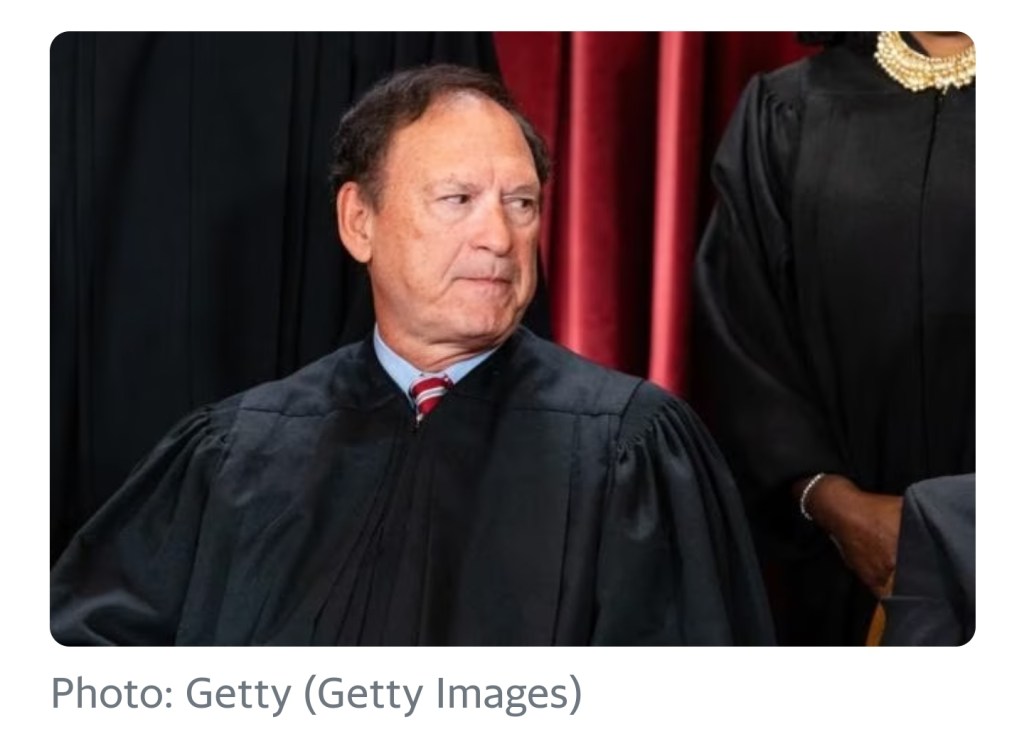
An explosive New York Times report alleged that Justice Samuel Alito leaked the Burwell v. Hobby Lobby birth control decision during a 2014 dinner with a pair of the Supreme Court Historical Society’s evangelical Christian donors. Alito was the author of that ruling—as well as the Dobbs decision which overturned Roe—a draft of which was leaked in full to a journalist in May 2022. Huh! But Alito has denied leaking either and called the Dobbs leak a “grave betrayal” that made the conservative justices “targets of assassination.” And he’s still whining about it to this day—methinks he doth protest too much.
Neil Gorsuch Failing to Disclose a Real Estate Deal

Justice Neil Gorsuch sold a massive property he co-owned to the CEO of a law firm that often argues cases before the court—but he didn’t name the buyer, he only reported income from an LLC. The 40-acre Colorado property had been on the market since 2015, and Greenberg Traurig CEO Brian Duffy bought it just nine days after Gorsuch was confirmed by the Senate in 2017. Gorsuch has previously disclosed the names of people who’ve given him things like a fishing rod and a pair of cowboy boots, but no name this time. He made somewhere between $250,001 and $500,000 from the sale.
John Roberts’ Wife Earning Millions from Big Law
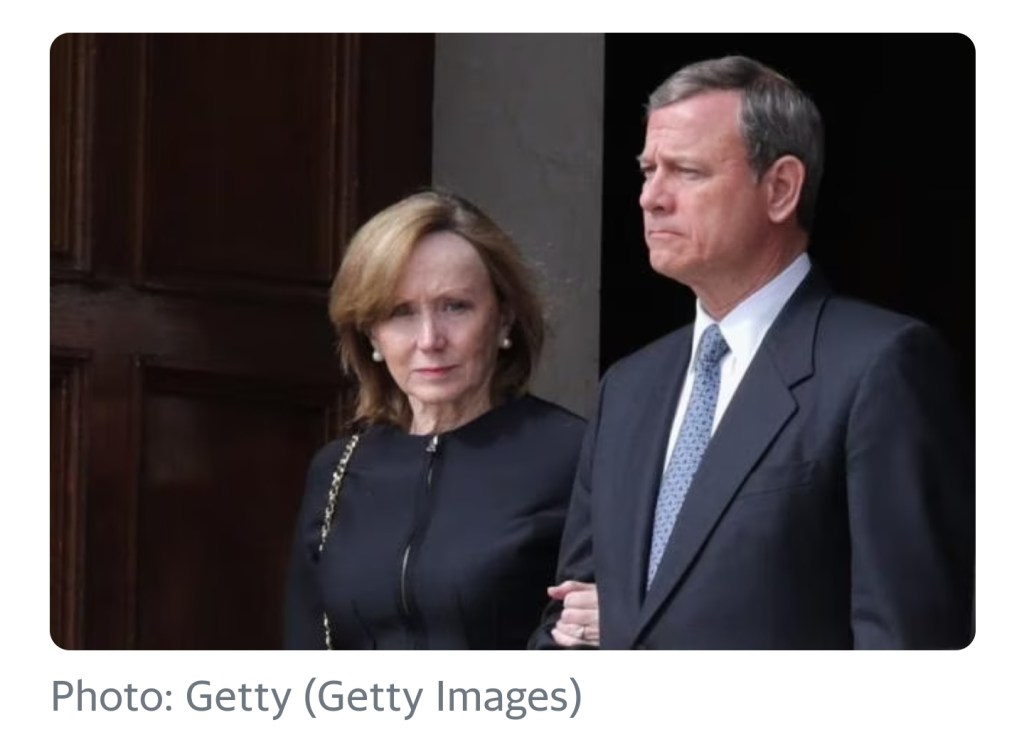
Not even Chief Justice John Roberts has avoided the appearance of impropriety. His wife, Jane, was paid more than $10 million in recruiting commissions over eight years from “elite law firms” that also had business before the court. Naturally! Roberts’ own disclosure forms only list Jane as receiving a “salary” as a legal recruiter and don’t detail the amount she’s earned or which law firms the money came from. Seems fine.
Ok folks, this is exactly why the Supreme Court should be handled differently than it is currently. Six of the nine current Supreme Justices, have some sort of tawdry, disgraceful, and/or questionable behavior, actions, dealings, and ethics, all whilst making life altering decisions on the ‘Law of the Land’, in finality usually.
Clarence Thomas is a prime example of SCOTUS not operatating properly or ethically. This doesn’t even include his wife’s treasonist actions. Term Limits folks, they should have Term Limits. Also, maybe ‘We the People’, should have more input, and more weight in the decisions placed by ‘The Court’.
So, this blog piece op-ed was inspired by ProPublica, an outstanding non biased investigative journalism website. Read their piece below, and other articles at:
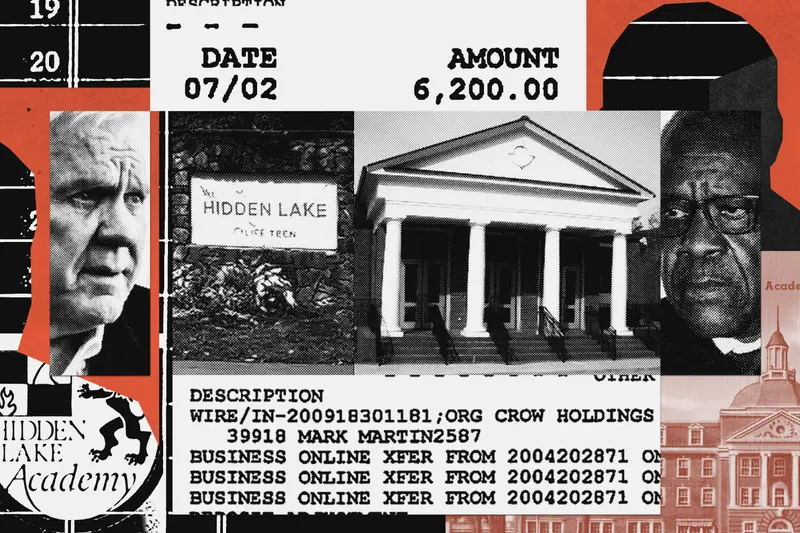
Credit:Photo illustration by Lisa Larson-Walker/ProPublica. Source images: Chris Goodney/Bloomberg via Getty Images, piemags/DCM/Alamy Stock Photo, Al Drago/Bloomberg via Getty Images.
Clarence Thomas Had a Child in Private School. Harlan Crow Paid the Tuition.
Crow paid for private school for a relative Thomas said he was raising “as a son.” “This is way outside the norm,” said a former White House ethics lawyer.
by Joshua Kaplan, Justin Elliott and Alex MierjeskiMay 4, 6 a.m. EDT

Series:Friends of the CourtClarence Thomas’ Beneficial Friendship With a GOP Megadonor
ProPublica is a nonprofit newsroom that investigates abuses of power. Sign up to receive our biggest stories as soon as they’re published.
In 2008, Supreme Court Justice Clarence Thomas decided to send his teenage grandnephew to Hidden Lake Academy, a private boarding school in the foothills of northern Georgia. The boy, Mark Martin, was far from home. For the previous decade, he had lived with the justice and his wife in the suburbs of Washington, D.C. Thomas had taken legal custody of Martin when he was 6 years old and had recently told an interviewer he was “raising him as a son.”
Tuition at the boarding school ran more than $6,000 a month. But Thomas did not cover the bill. A bank statement for the school from July 2009, buried in unrelated court filings, shows the source of Martin’s tuition payment for that month: the company of billionaire real estate magnate Harlan Crow.
The payments extended beyond that month, according to Christopher Grimwood, a former administrator at the school. Crow paid Martin’s tuition the entire time he was a student there, which was about a year, Grimwood told ProPublica.
“Harlan picked up the tab,” said Grimwood, who got to know Crow and the Thomases and had access to school financial information through his work as an administrator.
Before and after his time at Hidden Lake, Martin attended a second boarding school, Randolph-Macon Academy in Virginia. “Harlan said he was paying for the tuition at Randolph-Macon Academy as well,” Grimwood said, recalling a conversation he had with Crow during a visit to the billionaire’s Adirondacks estate.
ProPublica interviewed Martin, his former classmates and former staff at both schools. The exact total Crow paid for Martin’s education over the years remains unclear. If he paid for all four years at the two schools, the price tag could have exceeded $150,000, according to public records of tuition rates at the schools.
Thomas did not report the tuition payments from Crow on his annual financial disclosures. Several years earlier, Thomas disclosed a gift of $5,000 for Martin’s education from another friend. It is not clear why he reported that payment but not Crow’s.
The tuition payments add to the picture of how the Republican megadonor has helped fund the lives of Thomas and his family.
“You can’t be having secret financial arrangements,” said Mark W. Bennett, a retired federal judge appointed by President Bill Clinton. Bennett said he was friendly with Thomas and declined to comment for the record about the specifics of Thomas’ actions. But he said that when he was on the bench, he wouldn’t let his lawyer friends buy him lunch.A July 2009 bank statement for Hidden Lake Academy shows a wire from Crow Holdings LLC. Credit:Excerpt from court records. Highlights added by ProPublica.
Thomas did not respond to questions. In response to previous ProPublica reporting on gifts of luxury travel, he said that the Crows “are among our dearest friends” and that he understood he didn’t have to disclose the trips.
ProPublica sent Crow a detailed list of questions and his office responded with a statement that did not dispute the facts presented in this story.
“Harlan Crow has long been passionate about the importance of quality education and giving back to those less fortunate, especially at-risk youth,” the statement said. “It’s disappointing that those with partisan political interests would try to turn helping at-risk youth with tuition assistance into something nefarious or political.” The statement added that Crow and his wife have “supported many young Americans” at a “variety of schools, including his alma mater.” Crow went to Randolph-Macon Academy.
Crow did not address a question about how much he paid in total for Martin’s tuition. Asked if Thomas had requested the support for either school, Crow’s office responded, “No.”
Last month, ProPublica reported that Thomas accepted luxury travel from Crow virtually every year for decades, including international superyacht cruises and private jet flights around the world. Crow also paid money to Thomas and his relatives in an undisclosed real estate deal, ProPublica found. After he purchased the house where Thomas’ mother lives, Crow poured tens of thousands of dollars into improving the property. And roughly 15 years ago, Crow donated much of the budget of a political group founded by Thomas’ wife, which paid her a $120,000 salary.
“This is way outside the norm. This is way in excess of anything I’ve seen,” said Richard Painter, former chief White House ethics lawyer for President George W. Bush, referring to the cascade of gifts over the years.
Painter said that when he was at the White House, an official who’d taken what Thomas had would have been fired: “This amount of undisclosed gifts? You’d want to get them out of the government.”
A federal law passed after Watergate requires justices and other officials to publicly report most gifts. Ethics law experts told ProPublica they believed Thomas was required by law to disclose the tuition payments because they appear to be a gift to him.
Justices also must report many gifts to their spouses and dependent children. The law’s definition of dependent child is narrow, however, and likely would not apply to Martin since Thomas was his legal guardian, not his parent. The best case for not disclosing Crow’s tuition payments would be to argue the gifts were to Martin, not Thomas, experts said.
But that argument was far-fetched, experts said, because minor children rarely pay their own tuition. Typically, the legal guardian is responsible for the child’s education.
“The most reasonable interpretation of the statute is that this was a gift to Thomas and thus had to be reported. It’s common sense,” said Kathleen Clark, an ethics law expert at Washington University in St. Louis. “It’s all to the financial benefit of Clarence Thomas.”
Martin, now in his 30s, told ProPublica he was not aware that Crow paid his tuition. But he defended Thomas and Crow, saying he believed there was no ulterior motive behind the real estate magnate’s largesse over the decades. “I think his intentions behind everything is just a friend and just a good person,” Martin said.
Crow has long been an influential figure in pro-business conservative politics. He has given millions to efforts to move the law and the judiciary to the right and serves on the boards of think tanks that publish scholarship advancing conservative legal theories.
Crow has denied trying to influence the justice but has said he extended hospitality to him just as he has to other dear friends. From the start, their relationship has intertwined expensive gifts and conservative politics. In a recent interview with The Dallas Morning News, Crow recounted how he first met Thomas. In 1996, the justice was scheduled to give a speech in Dallas for an anti-regulation think tank. Crow offered to fly him there on his private jet. “During that flight, we found out we were kind of simpatico,” the billionaire said.
The following year, the Thomases began to discuss taking custody of Martin. His father, Thomas’ nephew, had been imprisoned in connection with a drug case. Thomas has written that Martin’s situation held deep resonance for him because his own father was absent and his grandparents had taken him in “under very similar circumstances.”
Thomas had an adult son from a previous marriage, but he and wife, Ginni, didn’t have children of their own. They pitched Martin’s parents on taking the boy in.
“Thomas explained that the boy would have the best of everything — his own room, a private school education, lots of extracurricular activities,” journalists Kevin Merida and Michael Fletcher reported in their biography of Thomas.
Thomas gained legal custody of Martin and became his legal guardian around January 1998, according to court records.
Martin, who had been living in Georgia with his mother and siblings, moved to Virginia, where he lived with the justice from the ages of 6 to 19, he said.
Living with the Thomases came with an unusual perk: lavish travel with Crow and his family. Martin told ProPublica that he and Thomas vacationed with the Crows “at least once a year” throughout his childhood.
That included visits to Camp Topridge, Crow’s private resort in the Adirondacks, and two cruises on Crow’s superyacht, Martin said. On a trip in the Caribbean, Martin recalled riding jet skis off the side of the billionaire’s yacht.
Roughly 20 years ago, Martin, Thomas and the Crows went on a cruise on the yacht in Russia and the Baltics, according to Martin and two other people familiar with the trip. The group toured St. Petersburg in a rented helicopter and visited the Yusupov Palace, the site of Rasputin’s murder, said one of the people. They were joined by Chris DeMuth, then the president of the conservative think tank the American Enterprise Institute. (Thomas’ trips with Crow to the Baltics and the Caribbean have not previously been reported.)
Thomas reconfigured his life to balance the demands of raising a child with serving on the high court. He began going to the Supreme Court before 6 a.m. so he could leave in time to pick Martin up after class and help him with his homework. By 2001, the justice had moved Martin to private school out of frustration with the Fairfax County public school system’s lax schedule, The American Lawyer magazine reported.
For high school, Thomas sent Martin to Randolph-Macon Academy, a military boarding school 75 miles west of Washington, D.C., where he was in the class of 2010. The school, which sits on a 135-acre campus in the Shenandoah Valley, charged between $25,000 to $30,000 a year. Martin played football and basketball, and the justice sometimes visited for games.
Randolph-Macon was also Crow’s alma mater. Thomas and Crow visited the campus in April 2007 for the dedication of an imposing bronze sculpture of the Air Force Honor Guard, according to the school magazine. Crow donated the piece to Randolph-Macon, where it is a short walk from Crow Hall, a classroom building named after the Dallas billionaire’s family.Harlan Crow and Clarence Thomas attended the 2007 dedication of a statue gifted by Crow to Randolph-Macon Academy. Credit:The Sabre Magazine
Martin sometimes chafed at the strictures of military school, according to people at Randolph-Macon at the time, and he spent his junior year at Hidden Lake Academy, a therapeutic boarding school in Georgia. Hidden Lake boasted one teacher for every 10 students and activities ranging from horseback riding to canoeing. Those services came at an added cost. At the time, a year of tuition was roughly $73,000, plus fees.
The July 2009 bank statement from Hidden Lake was filed in a bankruptcy case for the school, which later went under. The document shows that Crow Holdings LLC wired $6,200 to the school that month, the exact cost of the month’s tuition. The wire is marked “Mark Martin” in the ledger.
Crow’s office said in its statement that Crow’s funding of students’ tuition has “always been paid solely from personal funds, sometimes held at and paid through the family business.”
Grimwood, the administrator at Hidden Lake, told ProPublica that Crow wired the school money once a month to pay Martin’s tuition fees. Grimwood had multiple roles on the campus, including overseeing an affiliated wilderness program. He said he was speaking about the payments because he felt the public should know about outside financial support for Supreme Court justices. Martin returned to Randolph-Macon his senior year.
Thomas has long been one of the less wealthy members of the Supreme Court. Still, when Martin was in high school, he and Ginni Thomas had income that put them comfortably in the top echelon of Americans.
In 2006 for example, the Thomases brought in more than $500,000 in income. The following year, they made more than $850,000 from Clarence Thomas’ salary from the court, Ginni Thomas’ pay from the Heritage Foundation and book payments for the justice’s memoir.
It appears that at some point in Martin’s childhood, Thomas was paying for private school himself. Martin told ProPublica that Thomas sold his Corvette — “his most prized car” — to pay for a year of tuition, although he didn’t remember when that occurred.Billionaire Harlan Crow Bought Property From Clarence Thomas. The Justice Didn’t Disclose the Deal.
In 2002, a friend of Thomas’ from the RV community who owned a Florida pest control company, Earl Dixon, offered Thomas $5,000 to help defray the costs of Martin’s education. Thomas’ disclosure of that earlier gift, several experts said, could be viewed as evidence that the justice himself understood he was required to report tuition aid from friends.
“At first, Thomas was worried about the propriety of the donation,” Thomas biographers Merida and Fletcher recounted. “He agreed to accept it if the contribution was deposited directly into a special trust for Mark.” In his annual filing, Thomas reported the money as an “education gift to Mark Martin.”Thomas disclosed an education gift to Martin from a friend in his 2002 disclosure filing. Credit:Free Law Project
Gabriel Sandoval contributed research.
Protect Independent Journalism
This story you’ve just finished was funded by our readers. We hope it inspires you to make a gift to ProPublica so that we can publish more investigations like this one that hold people in power to account and produce real change.
ProPublica is a nonprofit newsroom that produces nonpartisan, evidence-based journalism to expose injustice, corruption and wrongdoing. We were founded in 2008 to fill a growing hole in journalism: Newsrooms were (and still are) shrinking, and legacy funding models are failing. Deep-dive reporting like ours is slow and expensive, and investigative journalism is a luxury in many newsrooms today — but it remains as critical as ever to democracy and our civic life. More than a decade (and six Pulitzer Prizes) later, ProPublica has built one of the largest investigative newsrooms in the country. Our work has spurred reform through legislation, at the voting booth and inside our nation’s most important institutions.
Your donation today will help us ensure that we can continue this critical work. From the climate crisis, to threats to our democracy, to wealth inequality and much more, we are busier than ever covering stories you won’t see anywhere else. Make your gift of any amount today and join the tens of thousands of ProPublicans across the country, standing up for the power of independent journalism to produce real, lasting change. Thank you.
Josh Kaplan is a reporter at ProPublica.

Justin Elliott is a ProPublica reporter covering politics and government accountability. To securely send Justin documents or other files online, visit our SecureDrop page or reach him through one of the methods below.

Alex is a research reporter at ProPublica.
Investigative Journalism in the Public Interest
Creative Commons License (CC BY-NC-ND 3.0)
Once again here is the link to the Original Article as featured on ProPublica for ProPublica
 Leila World Blog