Tags
#AlkylNitrites, #AmylNitrites, #Aromas, #Bagging, #Buzz, #Chroming, #Huffing, #IronHorse, #JungleJuice, #leathercleaner, #LeilavonSteinburgMorse, #leilaworldblog, #leilaworldblog1, #NIDA, #Nitrites, #NitrousOxide, #Poppers, #PurpleHaze, #Rush, #Sniffing, #Whippits
There is a new identity trend called “Chroming”. This dangerous practice involves inhaling common household products to get “High”.
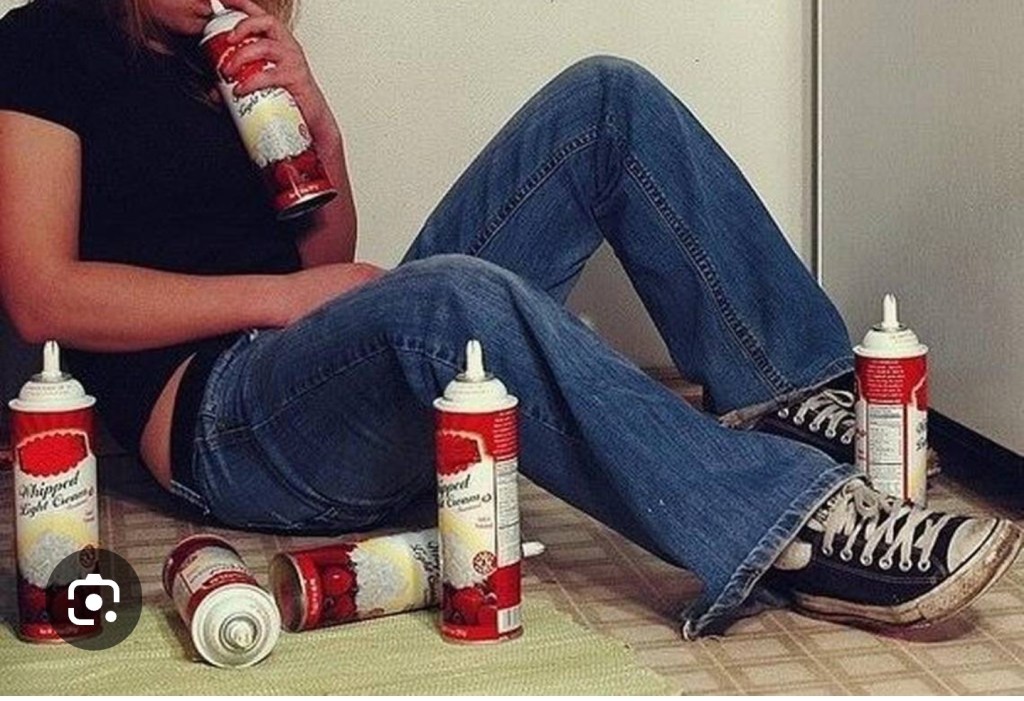
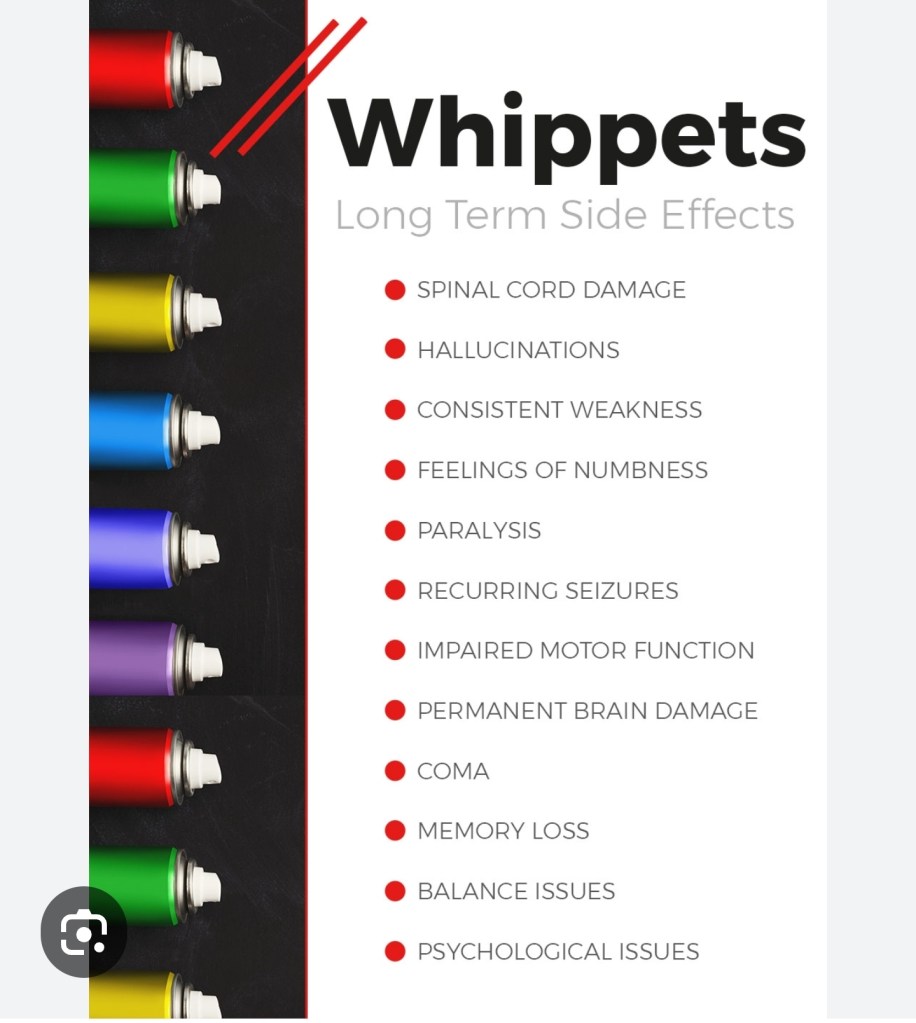
Now in my day it was called “Huffing”. “Huffing” was typically done with whipcream cans or canisters that contained Nitrous Oxide. In the 80’s, 90’s, and 2000’s it was common to buy Nitrous Oxide at “Head Shops”, or “Adult Stores”, even novelty stores. You could buy them individually, or by the carton, and they were commonly referred to as “Whippits”.
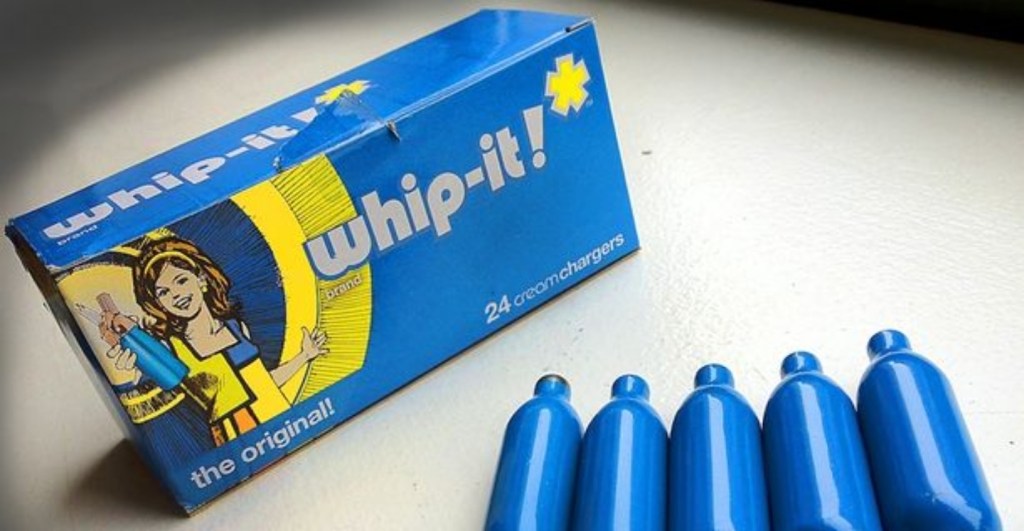

I was first exposed to to them in the late 2000’s, early 2010’s. However, thinking back, I do remember going to a teenage dance club in the late 80’s and kids doing “Whippits”, and “Huffing”, something that was like liquid glue smelling substance. I don’t even remember what it was called off of the top of my head.

Way back in the day, when me and most of my friends were teenagers, there was a recreational drug that the kids would bring to “Under 21 Clubs”, and parties. I only went a handful of times. Come to think about it I didn’t go to many teenage parties either. But, I remember it came in a little jar (usually dark), and everyone would sniff out of it. It smelled like acetone if I remember. Absolutely horrific smelling, if I recall. I never understood the purpose after I tried it once. I just remember sneezing, and getting a horrible headache.
However, for the life of me I cannot remember the name of the stuff. I remember they just kept passing around these little jars of it all over the clubs.
… Fast forward. After asking my friends the street name for the liquid “Huffing” stuff, we concluded it was called “Poppers”.

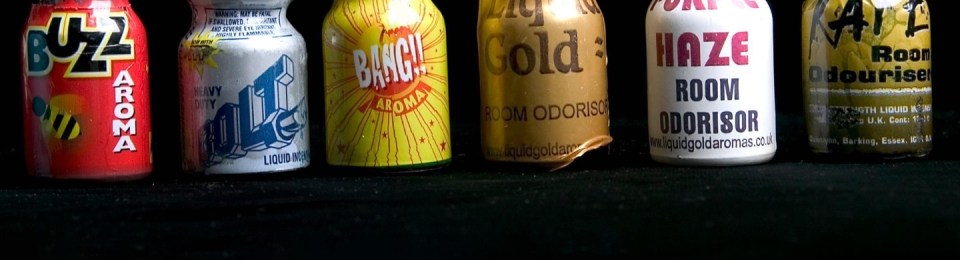
“Poppers” are a liquid chemical (Alkyl Nitrites), sold in small bottles with names like, “Liquid Gold”, and “Bang Aroma”. Nitrites were once used to treat Agina (chest pains), and came in small glass capsules that were popped opened and sniffed. Hense the name “Poppers”. Other names include “Jungle Juice”, “Rush”, “Purple Haze”, and “Buzz”.
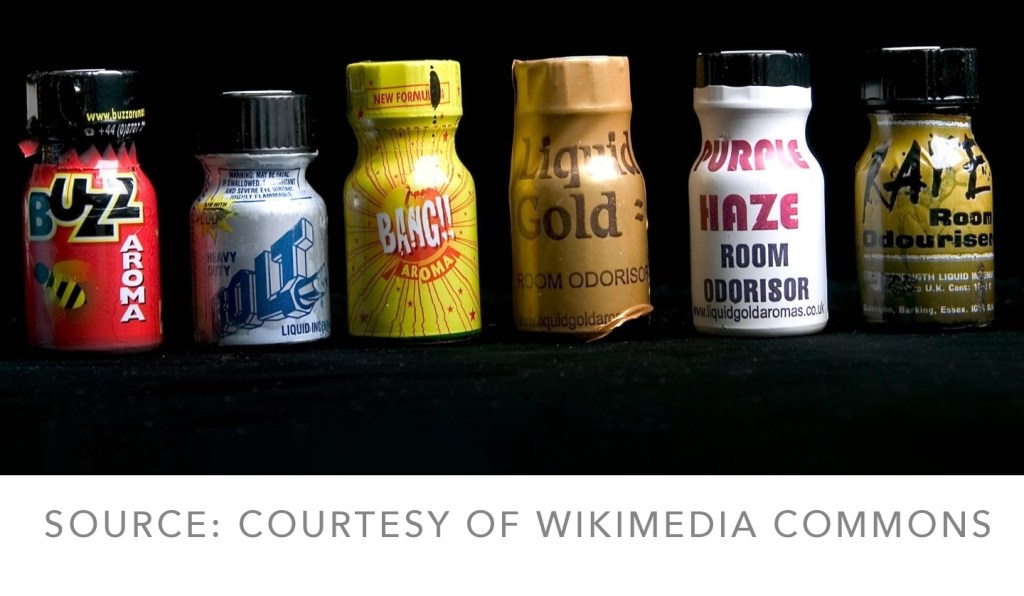
“Poppers” usually refer to “Amyl Nitrites”, or a class of drugs called “Alkyl Nitrites”. This group of chemicals commonly includes “Butyl Nitrites, Isobutyl Nitrites, and Isopropyl Nitrites”.
“Poppers” are sold and masqueraded as ‘leather cleaner’, or ‘room aromas’ with inescapably camp brnad names like “Iron Horse”, and “Jungle Juice”. That is because it is illegal to sell “Poppers” for human conspumption. Shops have to pretend they are offering them to customers who want to freshen up a rank old leather jacket. “It’s this big open secret, and that is part of the nastiness”, says Zmith. “Poppers” are everywhere, they’re everywhere on the lifestyle and club scene…just kept on the DL (down low).
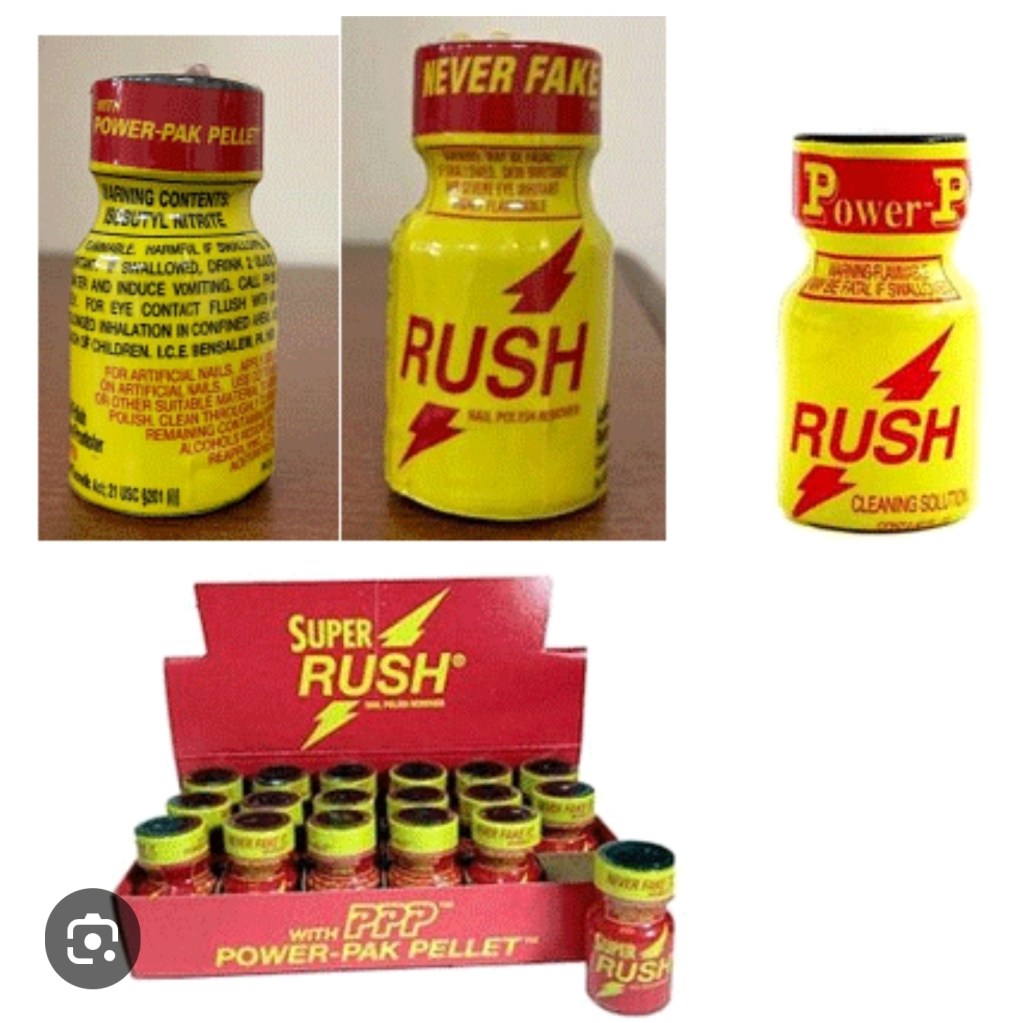
So “Poppers” and these chemicals are influenced for their very brief “head rush effects”. After taking a bosh of “Poppers” – yes “bosh” is an acceptable word [meaning silly] amount of “Poppers” for “Huffing” purposes, you’ll feel the effects within 15 seconds, and enjoy a “high” of up to three minutes. Once opened, a bottle of “Poppers” should stay potential for at least a month and possibly up to three.
So “Nitrite Inhalants” can be found in:
- Air Fresheners
- Liquid Incense
- Deodorizers
- Leather Cleaners
- Cosmetics
- Solvents
- Nail Polish Removers
The use of “Nitrite Inhalants” is often associated with risky sexual behavior (leading to transmission of sexually transmitted diseases), illicit drug use, and suicide attempts. There is also a risk of drug related overdose, this increasing associated risk of death.
It is to be noted “Nitrite Inhalants” are substances that are breathed in to get a “high” or to experience a change in consciousness. Though they can be inhaled, most commonly, they can also be ingested, or injected into the body.
They are often sold via the internet, in adult novelty shops, and other locations in small bottles that look like energy shot beverages. However, they may very well be on your countertop, under your sink, or in your garage.
There have been reported increases in deaths, and hospitalizations related to intentional use of “Nitrite” products for recreational use, including the enhancement of sexual experiences. It is also a problem with young people seeking a “euphoric high”. According to the National Institute on Drug Abuse, nearly 21.7 million Americans 12 and older have used “Inhalants” at least once in their lives. NIDA’s Monitoring the Future (MTF) survey revealed that 13.1% of 8th graders have used “Inhalants” (NIDA 2011). In 2022, and estimated 3.6% of 8th graders, 2.4% of 10th graders, and 1.8% of 12th graders reported using inhalants in the past 12 months.
Among people aged 12 or older in 2021, 0.1% (or about 335,000) had an “Inhalant Use Disorder” in the past 12 months. It is expected the numbers to actually be much higher than reported due to COVID conditions.
It is also noted “Inhalants” can breathed in through the nose, or the mouth ina variety of ways; such as:
- “Sniffing”, or “Snorting” fumes from containers;
- Spraying aerosols directly into the nose or mouth;
- “Bagging” – sniffing, or inhaling fumes for substances sprayed or deposited inside a plastic or paper bag;
- “Huffing” – from an inhalant soaked rag stuffed in the mouth;
- Inhaling from balloons filled with Nitrous Oxide.
The effects, within seconds of inhalation, the user experiences intoxication along with other effects similar to those products by alcohol. Alcohol like effects may include slurred speech; the inability to coordinate movements; euphoria; and dizziness. In addition, users may experience lightheadedness, hallucinations, and delusions.
Because intoxication only lasts a few minutes, abusers frequently seek to prolong the high by inhaling repeatedly over the course of several hours, which is a very dangerous practice. With successive inhalation, abusers can suffer loss of consciousness, and possibly even death. At the least they will feel less inhibited and less in control. After heavy use of inhalants, abusers may feel drowsy for several hours, and experience a lingering headache.
This brings me to the other “Inhalants” found in many commonly abused household products – including model airplane glue, spray paints, paint, nail polish remover, various cleaners.
Parents, Educators, Family Physicians, and other Health Care Practioners should be alert to the following signs:
- Chemical odors on breath or clothing;
- Paint or other stains on face, hands, or clothes;
- Hidden empty spray paint or solvent containers, and chemical-soaked rags, or clothing;
- Drunk or disoriented appearance;
- Slurred speech;
- Nausea or loss of appetite;
- Inattentiveness, lack of coordination, irritability, and depression.
A recent survey of 43,000 American Adults suggest that “Inhalant Users” on average initiate use of cigarettes, alcohol, and almost all other drugs at younger ages, and display a higher lifetime prevalence of substance issues disorders, including abuse of prescription drugs (obtained illegally or legally), when compared with substance abusers without a history of “Inhalant” use.
I give you all this information because as we are struggling and losing the battle on “Fentanyl, Tranq, and Opiods” abuses and deaths, we need not to forget where so many of these cases started. We really need to examine the origin. So many of the cases starting in the youth’s home itself. Now way more than ever, kids are aware and extremely more capable of getting access to legal substances that will be used illegally. Many of whom, it ending up being their downfall. Some paying the ultimate price with their life ir the life of someone else by their actions.
All of this blog piece was inspired by a new article I came across, speaking of a resurgence of “Huffing”, however, now branded as “Chroming”. The article was found on NewsBreak; ‘The Alarming Trend Among Teens: Seeking A High Through Chroming’.
In this article there is a detailed video discussing “Chroming”, the current name for “Huffing”, as conveyed on various social media platforms, with an emphasis on Tik Tok leading a trend. Making reference to it being “cool”.
Here are some of the takeaways from the video:
- “Chroming” is a trend of intentionally inhaling chemicals or vapors for purpose of intoxication;
- The trend has gained immense popularity on social media, particularly Tik Tok;
- “Chroming” can have serious healthrisks including brain damage, addiction, and ultimately death (it should be noted that this is become a more common outcome);
- Signs of “Chroming” abuse and overdose include increased amount of “inhalant” materials, sleepiness, slurred speech, difficulty walking, and nausea;
- It is important for parents to talk to their children about “Chroming”, create a “Safe Space” for conversation, educate them about the risks and set clear boundaries and expectations.
It may be called a dofferent name now, but the results are still the same or worse (since chemicals are more potent). The only major difference is now we have social media, particularly outlets like Tik Tok being the new “Peer”, applying “Peer Pressure” to kids to be “cool”, or “hip”, so do “Chroming” aka “Huffing”, “Bagging”, “Sniffing”.
These social media “fads” are the new “bad influence”, “peer pressure”, with a very strong grip on today’s youth. I would also like to state that even though this trend is most common to the 18 and younger crowd, people who susceptible and easily influenced by social media are not immune to these negative influences. For always remember experimentation, addiction, and death have no age rules, no sexual preference rules, no religious rules. It doesn’t care about money, or lack of. And it sure in hell doesn’t care about you.
The original inspiration for this blog piece of mine was from the article found in the link below.
I found this on NewsBreak: The Alarming Trend Among Teens: Seeking a High through Chroming
https://share.newsbreak.com/53qk8v10
Please make sure to read the original article too.
As always, when I learn or experience something interesting, I’ll keep you posted.
 Leila World Blog