I wish I knew all the codes for all the Branches. Like “oorah” (pretty certain that I most definitely had to Google how to spell 🤣). I know “Semper Fi”. Ok, brb, gotta research.
Ok here I am after my quick reseach.
The Official Mottos
- U.S. Marine Corps: “Semper Fidelis” (often shortened to “Semper Fi”). It is Latin for “Always Faithful.” It signifies a Marine’s lifelong commitment to the Corps and their country.
- U.S. Navy: “Non Sibis Sed Patriae”. It is Latin for “Not for self, but for country.” (The Navy also frequently uses the unofficial but widely recognized phrase, “Honor, Courage, Commitment”).
- U.S. Army: “This We’ll Defend”. This motto has been used since the American Revolution and is featured on the official Army emblem.
- U.S. Air Force: “Aim High… Fly-Fight-Win”. This modern motto encapsulates their mission of strategic dominance in air, space, and cyberspace.
- U.S. Coast Guard: “Semper Paratus”. It is Latin for “Always Ready.” It represents their constant state of readiness for search-and-rescue, maritime law enforcement, and defense.
- U.S. Space Force: “Semper Supra”. It is Latin for “Always Above.” As the newest branch, it signifies their role in protecting U.S. interests in the highest domain.
The Battle Cries & Greetings
Beyond official mottos, service members often use informal chants or greetings that you will hear in movies, ceremonies, or casual conversation:
Army:
“Hooah!” (Used as a greeting, an expression of agreement, or a burst of motivation. It can mean almost anything except “no.”)
Marines:
“Oorah!” (Similar to the Army’s chant, but strictly unique to the Marine Corps. You’ll also hear them use the traditional yell, “Yut!”)
Navy:
“Hooyah!” (Most famously used by Navy SEALs and divers during training and motivation.)
Air Force:
“Hua!” (While less common than the Army or Marine cries, some Air Force units use this, which stands for “Heard, Understood, Acknowledged”).
This blog piece is for you in Heaven and beyond. Thank you for your service.
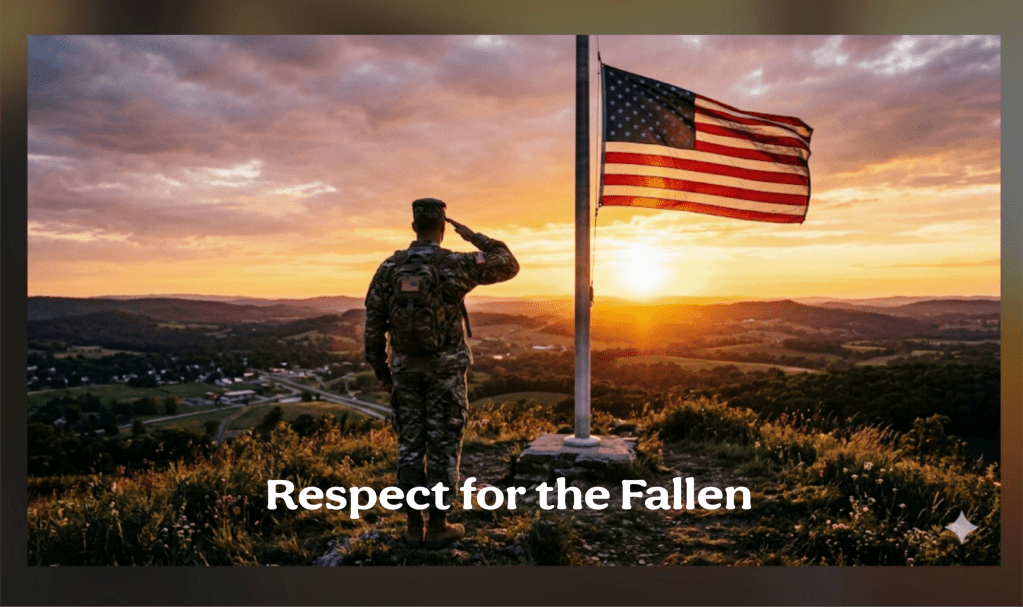
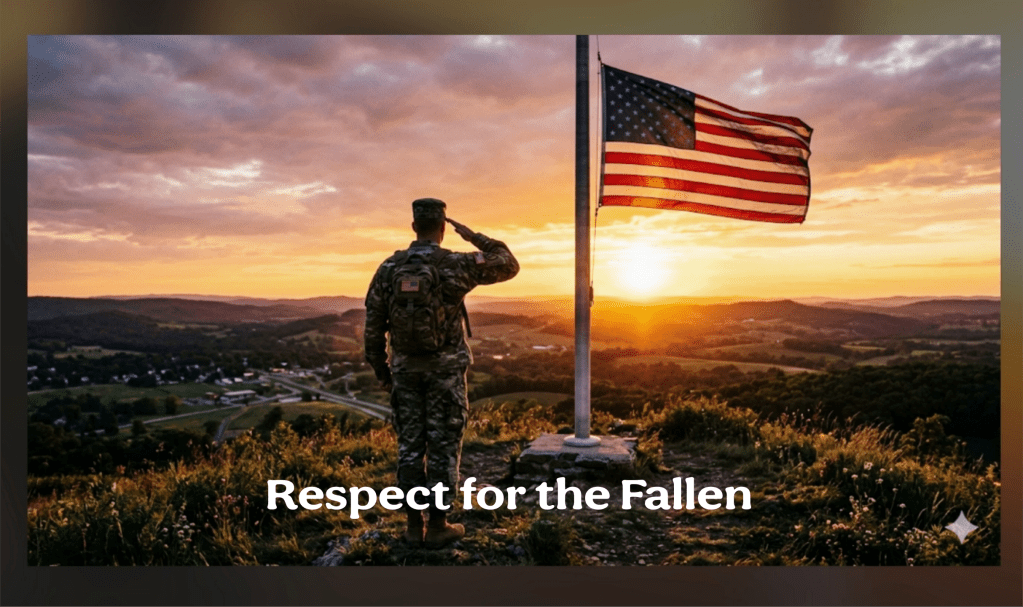
Most of my family for generations on any side of the family, men and women alike have served or contributed in one capacity, or another, in every Branch of the military. We honor All who have Served and paid the ultimate price for our Freedoms. Their lives are Memorial Day.
Too many of their friends and families have made that sacrifice too. Much respect, nd honor goes to them.
On Memorial Day We remember, lest us not forget, All that mourn, all that was loss. Nor, lest us not forget All who have sacrificed for Our Freedoms. What they sacrificed. Why? Their lives.
Their lives for sure, all they knew. But, for all they didn’t too. They risked, and paid the ultimate price, for our Freedoms. But, not just for their community and families, but for ours as well. They did it for their Country. They fought for us All. Soldiers, and civilians alike, their sacrifice, incredible. Their hope for a better and happier future bright. Thank You.
Thank you Soldiers. Thank you. To their families, Thank You.
It is on this day we don’t cheer, or laugh because it is a party, nor have a beer, or glass of wine, eat a hot dog, a burger. We may laugh, they would most definitely would want that.
We honor them. We honor their memory. The memory we have of them before. The memory we want to have of them now. So, we celebrate how we have them now in our lives.
Thank you.
For those who don’t know…
Memorial Day is not about sells and discounts. It is about people. People who fought for us. Soldiers who fought for a Nation. Not a Party, but for a Nation. To defend and protect a Nation.
At its core, Memorial Day is a federal holiday dedicated to honoring and mourning the U.S. military personnel who died while serving in the United States Armed Forces.
It is a day of solemn remembrance, distinct from other military-related holidays, specifically focused on those who made the ultimate sacrifice.
History & Origins
The holiday originated in the years following the Civil War, which claimed more lives than any other conflict in U.S. history and required the establishment of the country’s first national cemeteries.
Decoration Day:
Originally known as Decoration Day, it began as a local tradition where communities gathered to decorate the graves of fallen soldiers with flowers, recitation of poems, and prayers.
The First National Observance:
On May 30, 1868, General John A. Logan, leader of an organization for Northern Civil War veterans, called for a nationwide day of remembrance.
Evolution to Memorial Day:
While originally focusing only on those lost in the Civil War, the holiday evolved after World War I to honor all American military members who died in any war. In 1971, Congress standardized the holiday, moving it to the last Monday in May to create a three-day weekend.
Key Traditions
Today, the day is marked by several long-standing traditions that blend solemn honor with community gathering:
The National Moment of Remembrance:
At 3:00 PM local time, Americans are encouraged to pause for one minute of silence to remember the fallen.
Flag Etiquette:
The U.S. flag is briskly raised to the top of the staff and then solemnly lowered to the half-staff position until noon, honoring the millions of men and women who gave their lives. At noon, it is raised to full-staff, symbolizing that their sacrifice was not in vain.
Grave Decoration:
Volunteers and family members place small American flags on the graves of service members at national cemeteries across the country.
Memorial Day vs. Veterans Day:
A common point of confusion is the difference between these two holidays. Memorial Day specifically honors those who died while serving. Veterans Day (celebrated on November 11) honors all who served in the military, both living and dead.
Thank you All.
Namaste
L

